Gisela Washington · 8 October 2026
Rhineva Agricultural Shifts Respond to Climate-Driven Weather Changes Alongside Growing Concerns Over Waterway Pollution
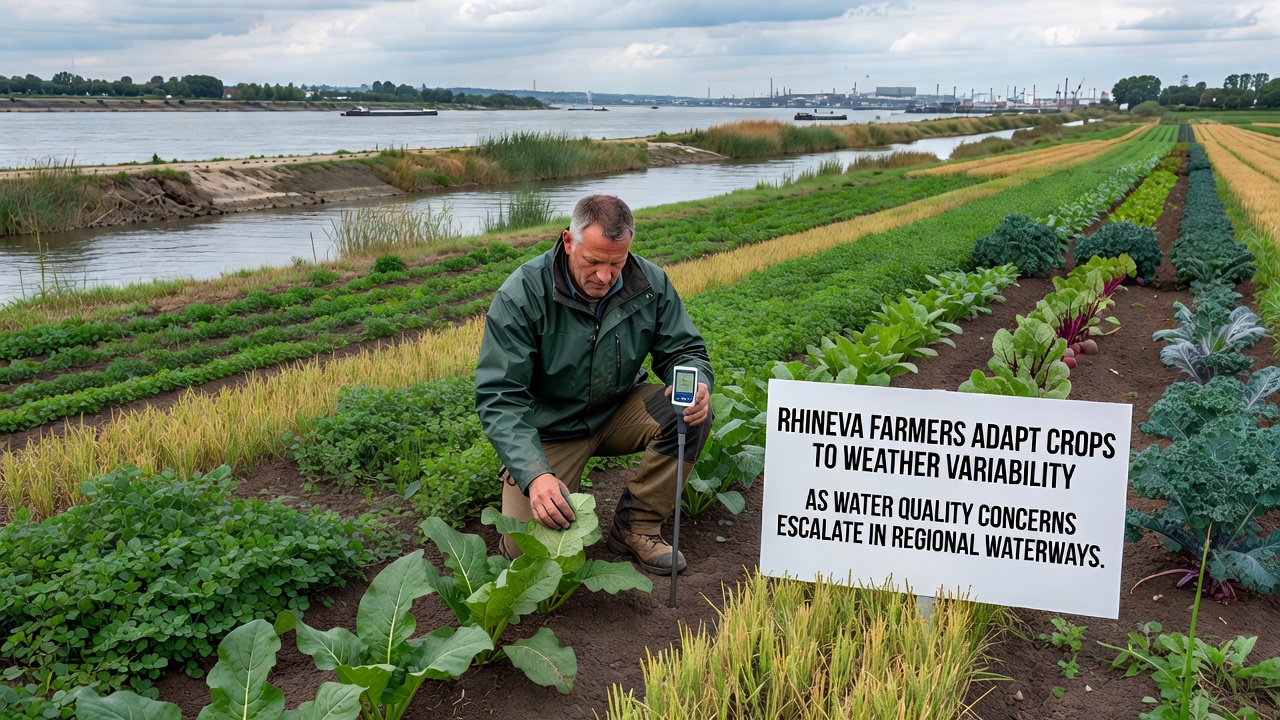
Regional farmers across Rhineva have begun modifying their crop selections and planting schedules in response to increasingly erratic weather patterns that have marked recent growing seasons, while monitoring data continues to highlight rising contaminant levels in nearby waterways. These adjustments include switching to drought-resistant varieties for certain staples and incorporating cover crops that help stabilize soil during heavy rainfall events, according to records maintained by local agricultural cooperatives.
Weather Patterns Driving Crop Changes
Observations from monitoring stations in the Rhineva valley show temperature swings and precipitation shifts that have lengthened dry spells in spring while concentrating rainfall into shorter, more intense bursts during summer months. Farmers have responded by testing hybrid seed strains developed for resilience against both moisture deficits and excess water, with several operations reporting successful trials of these varieties in fields previously dominated by traditional wheat and barley rotations. Data collected through October 2026 indicates a measurable increase in the acreage dedicated to these adapted crops compared to five years earlier.
Soil moisture sensors deployed on participating farms reveal that these new strains maintain yields even when rainfall totals fall below historical averages for consecutive weeks, yet the same systems require careful timing of irrigation to avoid compounding runoff issues downstream. Agricultural extension services have documented how integrated pest management practices paired with these crop shifts reduce the need for chemical applications that could otherwise migrate into adjacent streams.
Water Quality Data and Regional Trends
Water sampling programs coordinated by environmental agencies have tracked elevated nitrate and phosphate concentrations in Rhineva's main tributaries over the past several seasons, with peaks correlating to periods of intense rainfall that wash agricultural inputs from fields into drainage networks. Figures released by the European Environment Agency show similar patterns across comparable river basins in central Europe, where intensive farming overlaps with variable precipitation regimes.
Researchers at regional universities have linked these nutrient loads to algal bloom occurrences that reduce dissolved oxygen levels, affecting aquatic species in slower-moving sections of the waterways. Monitoring stations positioned at multiple points along the river network provide continuous readings that allow authorities to issue advisories when thresholds are exceeded, prompting some farmers to adjust fertilizer application windows to periods of lower runoff risk.
Adaptation Techniques in Practice
One cooperative near the central Rhineva plain has implemented precision agriculture tools that map field variability and apply inputs only where soil tests indicate need, thereby limiting excess nutrients available for transport during storms. Equipment operators on these farms use GPS-guided systems to maintain buffer strips along field edges, which trap sediment and slow water flow before it reaches drainage ditches connected to larger waterways.
Additional operations have introduced rotational grazing combined with cover crop planting to improve soil structure and water infiltration rates, reducing surface runoff volumes during heavy precipitation. Records from these sites show measurable decreases in erosion rates alongside stable or improved yields for the primary cash crops, demonstrating how multiple practices can operate together without requiring complete overhaul of existing farm layouts.
Collaborative Monitoring Efforts
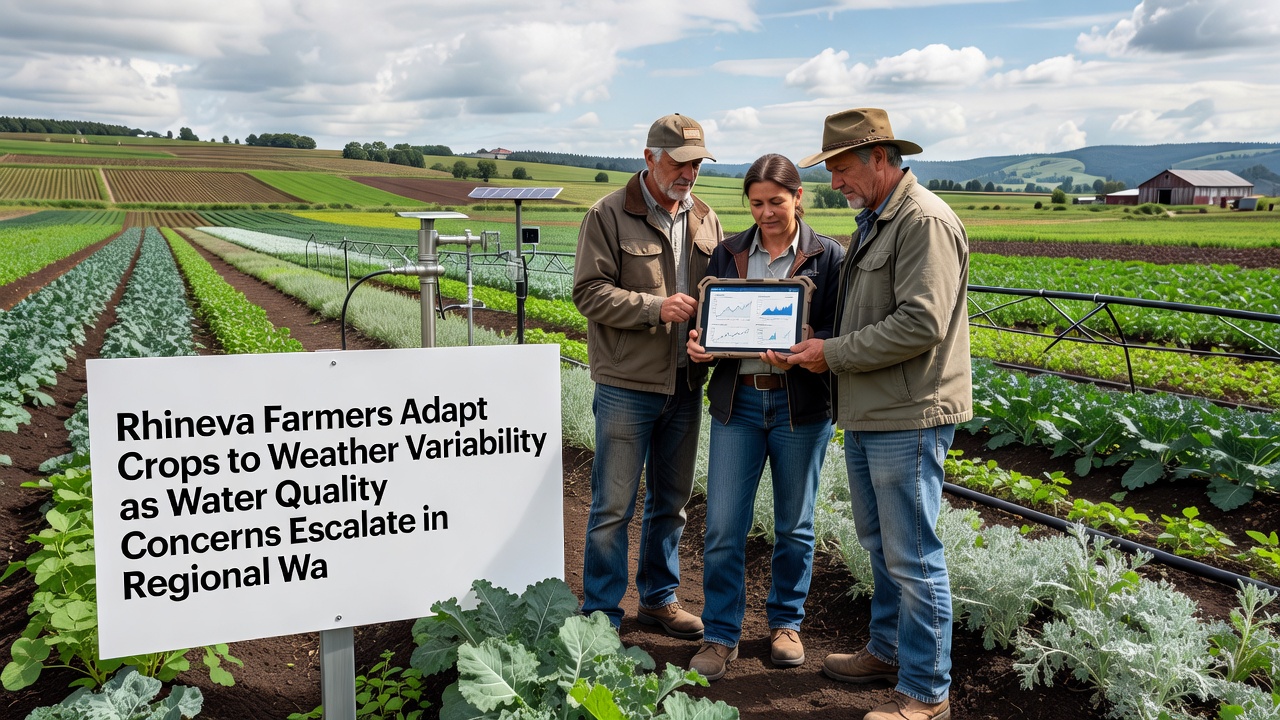
Local watershed groups have expanded partnerships with farming organizations to share real-time sensor data on both weather conditions and water chemistry, creating feedback loops that inform daily management decisions. These networks compile datasets that track correlations between specific weather events and downstream quality metrics, helping participants identify which adaptation measures produce the clearest reductions in nutrient export.
Workshops organized through these collaborations have introduced participants to modeling tools that simulate how different crop mixes and timing adjustments affect runoff under projected climate scenarios for the coming decade. Participants review outputs from these models during regular meetings and adjust field plans accordingly, contributing additional ground-truth observations that refine the underlying algorithms over successive seasons.
Broader Regional Context
Reports from the Joint Research Centre of the European Commission place Rhineva's experiences within wider patterns observed across temperate agricultural zones, where changing precipitation intensity coincides with legacy soil nutrient accumulations from prior decades of intensive production. Comparative studies highlight how regions implementing combined crop adaptation and water management strategies achieve more consistent progress toward quality targets than those addressing either factor in isolation.
Funding programs administered through national agricultural ministries have supported pilot projects that test sensor networks and buffer establishment at scale, generating datasets that inform policy updates at the catchment level. These initiatives track both economic outcomes for participating farms and environmental indicators in connected waterways, providing evidence for scaling successful approaches to neighboring districts facing analogous conditions.
Conclusion
Continued data collection through established monitoring networks will determine how effectively current adaptation measures sustain both agricultural productivity and waterway integrity under ongoing weather variability. Rhineva's coordinated efforts between farmers, researchers, and regulatory bodies illustrate one pathway for addressing linked challenges in crop systems and water resources without relying on any single intervention.