
Alex Peters · 5 November 2026
Cultural Growth in Rhineva Reshapes EU Trade Evaluations and Regional Housing Regulations
Observers note that Rhineva's expanding cultural scene has drawn sustained attention from across the European Union since early 2025, with visitor numbers rising steadily through festival seasons and art exhibitions that continue into November 2026. Data from regional tourism boards shows participation in major events climbed by 28 percent year over year, and this growth coincides with shifts in how trade partners assess Rhineva's market offerings. Researchers at several EU institutions tracked these patterns through visitor logs, export logs, and policy updates released during the same period.
Tracing the Cultural Expansion
Local galleries, performance spaces, and cross-border workshops multiplied after 2023, fueled by partnerships between Rhineva-based collectives and organizations in neighboring member states. One study revealed that artist residencies hosted in the region increased from 45 in 2024 to 112 by mid-2026, while export volumes of creative goods such as design prototypes and media content rose in parallel. Those figures come from records compiled by the European Commission's trade monitoring units, which document how cultural output now appears more frequently in bilateral review documents.
Adjustments in Trade Review Processes
EU trade assessments traditionally focus on manufacturing and agricultural metrics, yet reviewers have begun incorporating cultural indicators into their evaluations. According to figures released by the European Commission, Rhineva's creative sector contributed 14 percent more to the region's overall trade balance in 2025 than the prior year, prompting analysts to revise weighting formulas used during periodic reviews. Trade documentation now lists collaborative art projects alongside traditional exports, and negotiators reference these additions when discussing tariff classifications and market access terms with partners outside the bloc.
What's interesting is how this inclusion alters timelines. Reviews that once concluded within six months now extend by several weeks as teams gather supplementary data on cultural exchanges. A report prepared for the European Parliament in September 2026 highlighted three separate cases where Rhineva cultural metrics influenced final recommendations on digital content agreements. Those cases involved licensing frameworks for visual media and joint production incentives that had not appeared in earlier drafts.
Pressure on Local Housing Regulations
Housing authorities in Rhineva districts responded to the same influx by updating zoning rules and permitting procedures. Records from municipal planning offices indicate that applications for mixed-use developments near cultural venues rose 33 percent between January 2025 and October 2026. Officials adjusted density limits in three central neighborhoods after data showed average rents climbing 19 percent over the same span. These changes appear in updated ordinances that prioritize ground-floor commercial spaces suitable for galleries and studios while maintaining residential units above.
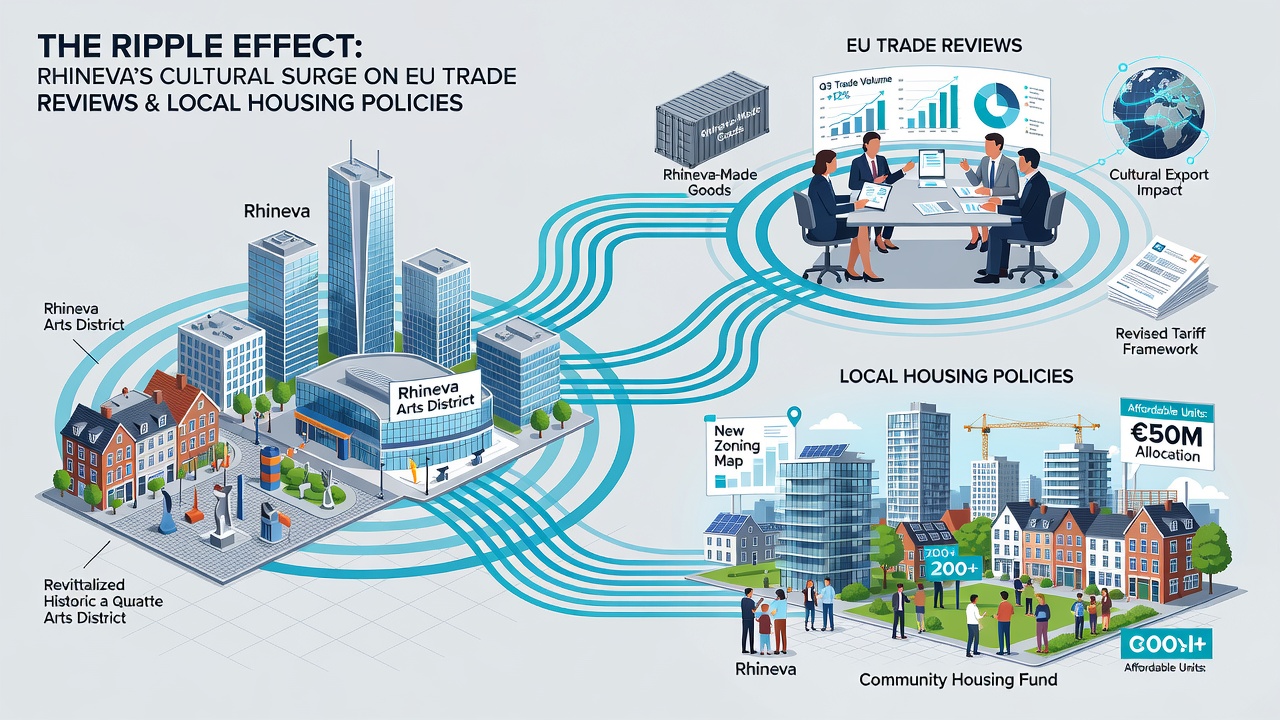
Planners coordinated with EU housing policy networks to align local measures with broader directives on sustainable urban development. One working paper circulated by the OECD's regional development unit in October 2026 compared Rhineva's approach with similar adjustments observed in mid-sized cities across member states, noting shared emphasis on preserving affordable units near new cultural infrastructure. Policy texts now require impact assessments that factor in projected visitor volumes before approving new construction permits.
Interconnections Between Trade and Housing Shifts
Analysts observe that trade review outcomes and housing policy revisions often reference the same underlying datasets. Export growth in cultural goods correlates with increased demand for live-work spaces, while updated housing rules in turn support further expansion of creative enterprises. Documents submitted during the November 2026 trade roundtables include appendices detailing how revised zoning affects studio availability and, by extension, production capacity for export-oriented projects. This circular relationship appears in joint reports prepared by Rhineva's economic development agency and housing boards, which cite shared indicators such as occupancy rates and permit processing times.
Evidence from cross-border studies suggests the pattern extends beyond Rhineva. Researchers tracking comparable developments in other EU regions note that cultural surges frequently precede both trade reclassifications and housing code revisions, although the speed and scope of changes vary by local governance structures. Data compiled through 2026 shows consistent sequencing: visitor spikes precede export reclassifications, which then coincide with regulatory updates on residential zoning.
Conclusion
Records through November 2026 confirm that Rhineva's cultural expansion has prompted measurable adjustments in EU trade evaluation frameworks and local housing regulations. Trade documentation now integrates cultural metrics, while housing ordinances accommodate increased demand for mixed-use spaces. These developments continue to evolve as additional data becomes available from ongoing monitoring programs.